
VoIP is worth it for most small offices in 2026 if you already have reliable business-grade internet: basic hosted plans run roughly $20 to $25 per user per month, and tiers with video conferencing and CRM integration land at $25 to $35, undercutting the hardware and long-distance fees of a legacy phone system. The catch is bandwidth and power — a spotty connection or a router that can't prioritize voice traffic turns VoIP into dropped calls, and you still need a battery backup or cellular failover to keep phones working when the internet or the power goes out.
- Is VoIP worth it for a small office in 2026? Yes, if the office already has stable business internet and a UPS for the router.
- Basic hosted VoIP runs about $20 to $25 per user per month; premium tiers with video and CRM sync run $25 to $35.
- Each active VoIP call needs roughly 100 kbps of bandwidth in each direction — undersized internet is the top cause of call quality complaints.
- VoIP fails during a power or internet outage unless the office has battery backup and a cellular failover option.
- A network readiness check before switching catches the problems a VoIP vendor won't flag.
Why this matters
Small offices switch to VoIP to cut phone bills and let staff take calls from a laptop instead of a desk unit chained to a wall jack. That part works. What gets missed is that VoIP call quality depends entirely on the office network, and a network that was fine for email and browsing can choke the moment five people are on VoIP calls at once.
TechConnect LLC sees the same pattern across North Carolina offices: the phone bill drops, but nobody checked whether the router can prioritize voice traffic or whether the internet plan has enough headroom for concurrent calls. That gap is where VoIP projects go wrong in 2026, not the phone system itself.
Is VoIP worth it for a small office in 2026?
Yes, for most offices with five or more employees and a decent internet connection, VoIP is worth it. The math favors VoIP on flexibility and cost per line, but a traditional landline still has one advantage worth naming honestly: it usually keeps working during a power outage, because the phone company's copper line carries its own power. VoIP does not, unless you add a battery backup.
| Factor | Hosted VoIP | Traditional landline/PBX |
|---|---|---|
| Monthly cost per user | $20-$35 depending on tier | Per-line carrier fee plus on-site equipment upkeep |
| Setup | Cloud-based, phones plug into existing network | On-premise PBX hardware and dedicated wiring |
| Scaling up or down | Add or remove users through an online portal | Requires new lines or hardware from the carrier |
| Works from home or a second location | Yes, via softphone app on any internet connection | No, tied to the physical line |
| Power outage | Down unless you have battery backup and cellular failover | Usually stays up on copper-line power |
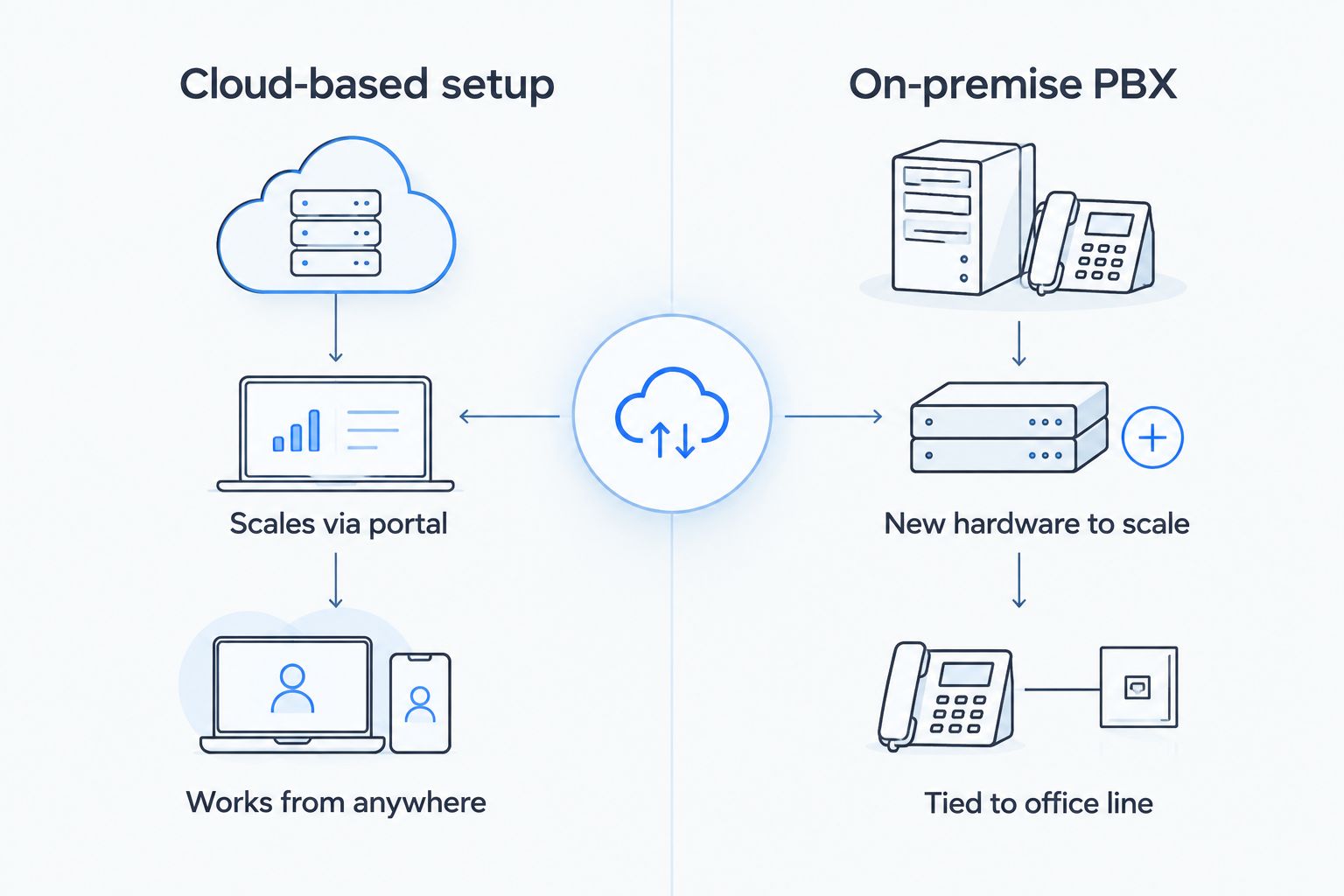
For an office that already runs on cloud tools and staff who split time between the office and home, VoIP wins clearly. For an office in an area with unreliable power or spotty internet, the calculation is closer, and a battery backup for the router and phones stops being optional.
Basic hosted VoIP: $20 to $25 per user per month
This tier covers standard calling, voicemail-to-email, an auto-attendant, and a mobile app. It's the right starting point for an office of 3-10 people that mostly makes and takes calls and doesn't need call center features. Verdict: buy if the office network already tests clean for bandwidth and jitter.
Side-by-side comparisons of vendors and feature sets are worth reading before you commit, since plan names and included features vary by provider — see the best VoIP phone systems for small businesses breakdown for a current list.
Standard VoIP with video and CRM integration: $25 to $35 per user per month
This tier adds video conferencing, call recording, and integration with CRM or helpdesk software so a call automatically logs against a customer record. It fits offices that do sales or client-facing support and need a paper trail on every call. Verdict: buy for sales-driven offices, wait if the team is under five people and doesn't use a CRM yet — the extra $5-$10 per user per month isn't earning its keep.
Why VoIP costs vary for small offices
- Number of users — most providers price per seat, so a 20-person office pays roughly double a 10-person office at the same tier.
- International or high-volume calling — plans built around domestic calling can add per-minute charges for international numbers.
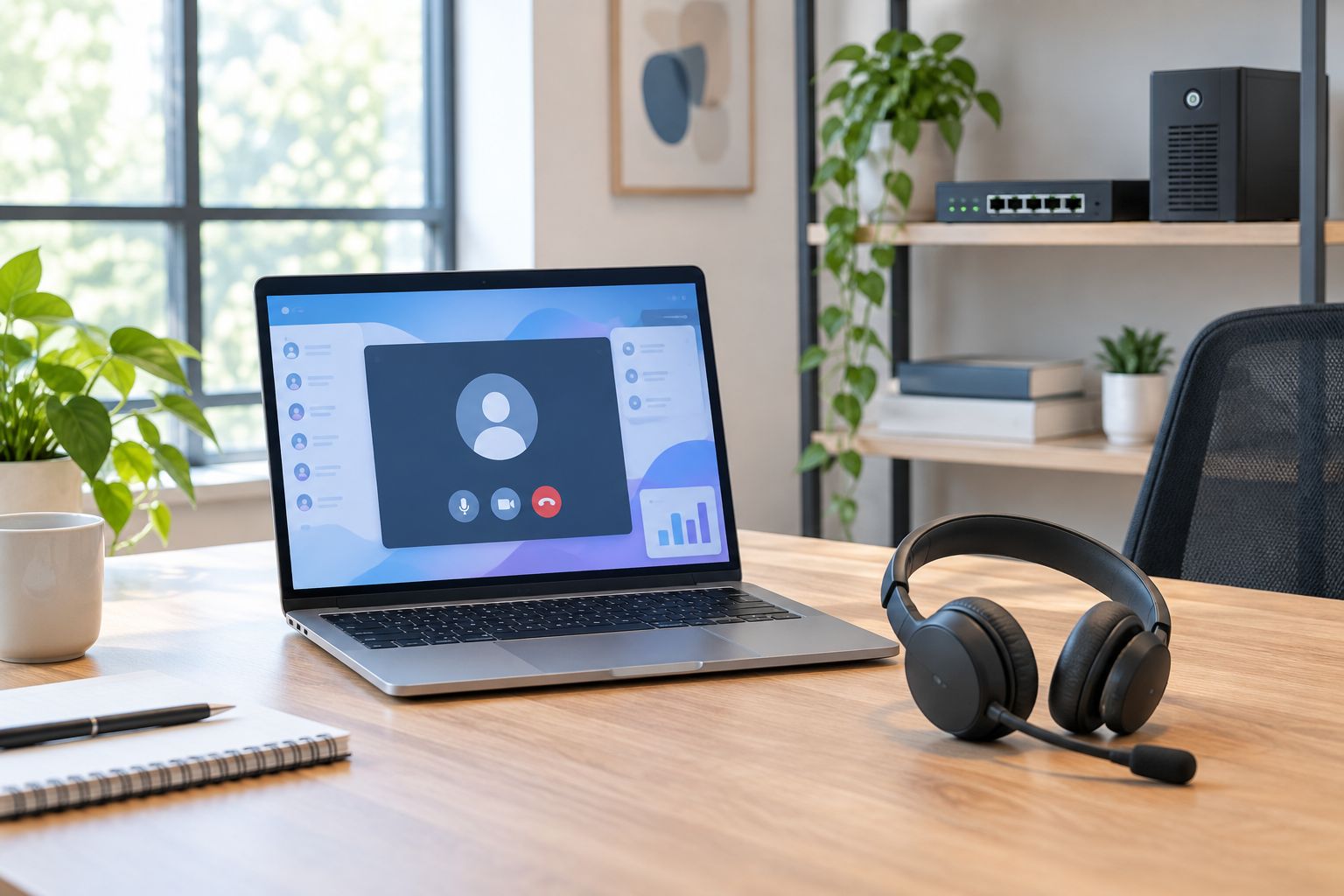
- Hardware choice — physical desk phones add a line item; an all-softphone setup (headset plus laptop) skips that cost entirely.
- Bandwidth requirements — offices with 10+ concurrent callers may need an internet plan upgrade before VoIP performs well.
- Integrations — CRM, helpdesk, and analytics add-ons are usually priced separately from the base VoIP seat.
- Contract length — annual commitments typically undercut month-to-month pricing on the same feature tier.
Does VoIP still work if your internet goes down?
No, standard VoIP stops working the moment the internet connection drops, since calls route entirely over that connection. Some providers offer automatic failover to a cell network or a secondary internet line, but that's an add-on, not the default. Offices in areas with frequent outages should treat a UPS and a backup internet path as part of the VoIP budget, not an afterthought.
How much bandwidth does VoIP need for a small office?
Each active VoIP call needs roughly 100 kbps of bandwidth in each direction, so an office running 10 simultaneous calls needs about 1 Mbps of dedicated upload and download headroom just for voice, on top of whatever the rest of the office is using. Undersized bandwidth is the single most common cause of choppy audio and dropped calls after a VoIP switch. A network assessment before migration — checking upload speed, router QoS settings, and Wi-Fi congestion — catches this before staff start complaining, and it's worth reviewing the office network workflow for VoIP calls if call quality is already an issue.
Is VoIP more reliable than a landline in 2026?
VoIP call quality is now comparable to a landline on a properly configured network, but reliability during a power or internet outage still favors a traditional copper landline. The 2026 answer depends on what "reliable" means to the office: call clarity during business hours, or staying connected when the power flickers.
Get a network readiness check
Find out if your office internet and router can handle VoIP before you switch.
FAQ
Is VoIP worth it for a small office in 2026?
Yes, for most offices with stable business internet — basic plans run $20 to $25 per user per month and cut hardware costs versus a traditional phone system. The main tradeoff is that VoIP goes down with the internet unless you add battery backup and failover.
How much does VoIP cost per user per month?
Basic hosted VoIP costs $20 to $25 per user per month in 2026, and tiers with video conferencing or CRM integration run $25 to $35. Pricing scales per seat, so total cost depends on headcount.
Does VoIP work during a power outage?
No, standard VoIP stops working when the power or internet goes out, unlike a traditional copper landline that carries its own power. A UPS for the router and switch keeps phones up during a short outage.
How much internet speed does VoIP need?
Each active VoIP call needs about 100 kbps of bandwidth in each direction, so 10 simultaneous calls need roughly 1 Mbps of dedicated headroom on top of normal office internet use.
Is VoIP cheaper than a landline for a small business?
Usually yes on a per-line basis, since VoIP skips much of the on-premise PBX hardware and wiring a traditional landline system requires. The savings depend on call volume and how many features the office actually uses.
Can VoIP work with remote or hybrid employees?
Yes, VoIP softphone apps let staff make and take business calls from any internet connection, which is one of its biggest advantages over a landline tied to a physical office line.
What's the biggest hidden cost of switching to VoIP?
Network upgrades — many offices need a faster internet plan, a router with QoS settings, or a battery backup before VoIP performs reliably, and those costs aren't included in the per-user VoIP price.
One last thing
The VoIP decision most offices get wrong isn't the vendor or the price tier, it's skipping the network check before the switch. A phone system that tests fine in a demo can still choke on an office Wi-Fi network already carrying video calls and cloud backups, and by the time staff notice dropped calls, the contract is already signed.