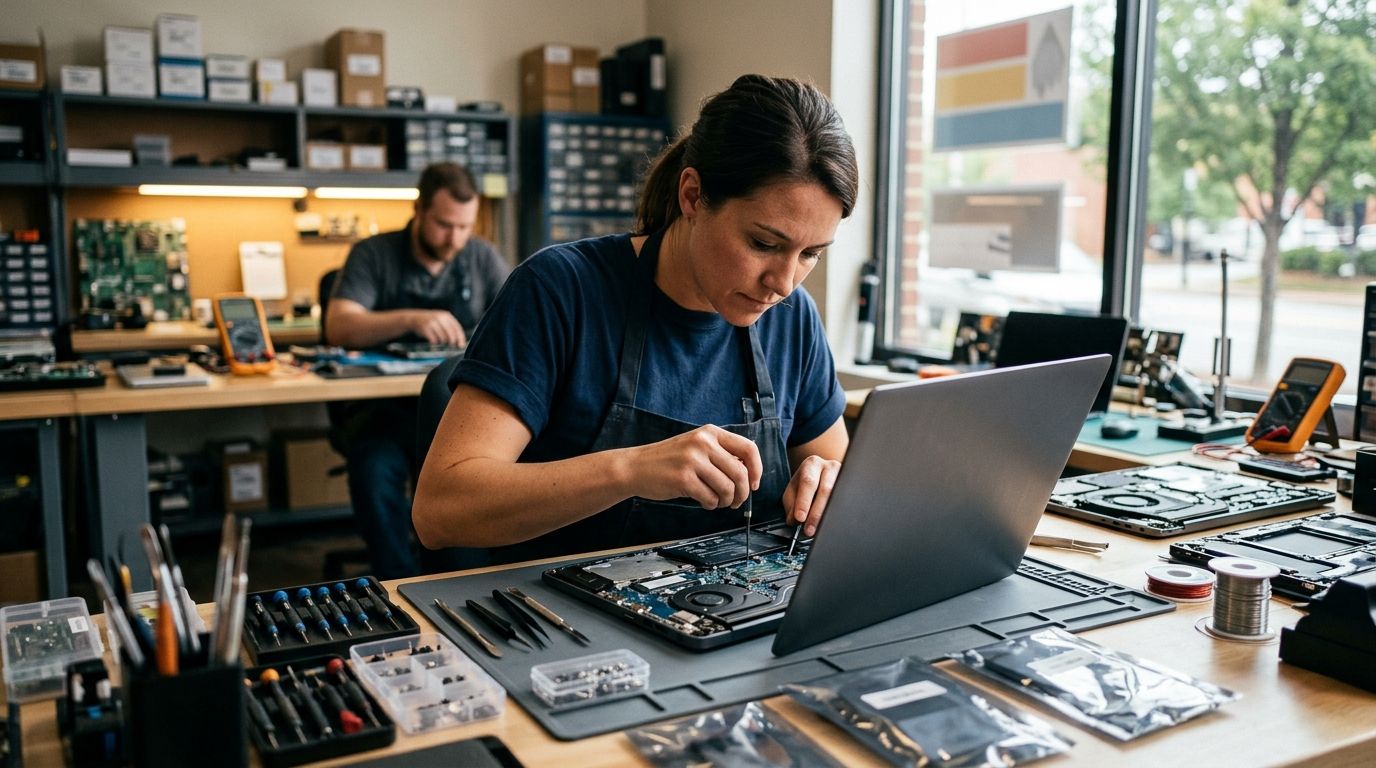
Managed IT support is worth it for a small business in 2026 once your team relies on more than a couple of computers, handles client or patient data, or has no one dedicated to catching problems before they cause an outage. It stops paying off once you're a one- or two-computer operation with no compliance requirements and backups that already run reliably — a break-fix technician on call covers that gap for less. The real math depends on how many people touch the network daily, what an hour of downtime actually costs your business, and whether you're currently patching security gaps yourself for free.
- Managed IT support is worth it for a small business with several employees, remote staff, or compliance needs in 2026.
- Break-fix support alone leaves gaps in patching, monitoring, and backup oversight between visits.
- TechConnect LLC provides managed business IT support and PC tune-ups to businesses across North Carolina.
- Skip managed IT if you run a single-computer setup with no sensitive data and backups already working.
- The deciding factor isn't headcount alone — it's how much an outage or breach would actually cost you.
Why this matters
Small businesses in 2026 run more of their operations through cloud tools — QuickBooks, Microsoft 365, point-of-sale systems, shared file drives — than they did five years ago, and every one of those tools is a door a virus or a failed update can walk through. A single infected laptop connected to shared files can take down invoicing or client records for the whole office, not just one desk.
The question isn't whether IT problems will happen. It's whether someone catches them before they turn into a lost day of work or a client's data leaking. TechConnect LLC works with home and business clients across North Carolina on exactly this tradeoff, and the pattern is consistent: businesses that wait until after a crash or infection pay more in lost time than they would have paid for monitoring that prevented it.
Is managed IT support worth it for a small business in 2026?
The honest answer depends on which model you're comparing it against. Here's how the three common setups actually compare:
| Support model | Best for | Downtime response | Security coverage | Verdict |
|---|---|---|---|---|
| Managed IT support (flat monthly plan) | Businesses with several employees, remote staff, or compliance needs | Proactive monitoring flags problems before they cause an outage | Patching, endpoint protection, and backup checks built into the plan | Worth it for growing teams |
| Break-fix (pay per visit) | Solo operators or very small offices with simple setups | Reactive — a technician is called after something breaks | Depends entirely on what you install and maintain yourself | Fine for minimal, low-risk setups |
| No formal support (DIY) | Single-computer businesses with no sensitive data | No safety net; the owner troubleshoots alone | Whatever free tools the owner remembers to update | Risky once you handle client data |
The managed model wins when the cost of one bad week — a ransomware infection, a crashed server, a missed client deadline — outweighs a predictable monthly fee. It loses when your setup is simple enough that nothing catastrophic is actually at stake. A quick way to check where you land: pull up what business IT support costs for a small office and compare it against what a single day of downtime would cost your team in lost billable hours.
“If a single unpatched laptop can take down shared files for the whole office, break-fix support is arriving too late to matter.”
Why the answer varies
No two small businesses have the same risk profile, and that's why the same question gets different honest answers. The factors that actually move the needle:
- Employee count and network complexity — five people on one shared drive need different oversight than one person on a laptop.
- Industry compliance requirements — HIPAA, PCI-DSS, and insurance carrier rules often require documented security practices that DIY setups can't produce.
- Remote or hybrid work — every home network connecting to company files is a new entry point that needs securing.
- Past security incidents — a business that's already been hit by malware or a phishing attempt has a different risk baseline than one that hasn't.
- In-house technical skill — if no one on staff can read a security alert or restore a backup, that gap has to be filled by someone.
- Growth stage — a business adding staff and devices every quarter outgrows informal IT fast.
Companies weighing this decision for the first time often start by checking small business IT support providers in North Carolina to see what a managed plan actually covers before deciding to switch.
See if managed IT fits your business
Compare what's covered before you switch from break-fix support.
How much does managed IT support cost per month for a small business?
Managed IT support in 2026 is typically billed as a flat monthly fee scaled to device count, employee count, and how much monitoring and help desk coverage you need — not a per-incident charge. The exact number depends heavily on those variables, so the most reliable way to estimate it for your setup is to work through how much managed IT support costs per month, which breaks the pricing drivers down by business size.
Is managed IT support better than hiring an in-house IT person?
For most small businesses in 2026, managed IT support covers more ground than a single in-house hire because it bundles monitoring, patching, backup oversight, and help desk access instead of relying on one person's schedule and skill set. An in-house hire makes more sense once a business is large enough to need someone physically on-site every day, but a solo IT employee still has vacations, sick days, and skill gaps that a managed team doesn't.
What's included in a typical managed IT support plan?
A typical managed IT support plan in 2026 covers proactive network monitoring, patch and update management, endpoint protection, backup oversight, and a help desk for day-to-day problems. Some plans layer on VoIP support, email security, and compliance documentation depending on the industry — a medical practice or law firm needs more of that layer than a retail shop does.
FAQ
Is managed IT support worth it for a small business in 2026?
It's worth it once your business has several employees, handles sensitive data, or has no dedicated tech person, because proactive monitoring catches problems before they cause downtime. A single-computer operation with reliable backups and no compliance requirements often does fine without it.
How much does managed IT support cost per month?
Monthly managed IT pricing scales with device count, employee count, and how much coverage you need — there's no single flat number that applies to every business. A cost breakdown by business size helps narrow the estimate before you request a quote.
What's the difference between managed IT support and break-fix support?
Managed IT support monitors your systems continuously and fixes problems before they cause an outage, while break-fix support waits for something to fail before a technician gets involved. Break-fix is cheaper upfront but leaves gaps in patching and monitoring between visits.
Do solo businesses and freelancers need managed IT support?
Most solo operators with a single computer and no sensitive client data don't need a full managed plan in 2026. Once you start storing client records, taking payments, or working across multiple devices, the equation changes.
What industries benefit most from managed IT support?
Accounting firms, medical and dental practices, law firms, insurance agencies, and real estate agencies benefit most because they handle sensitive client data under regulatory pressure. Retail and e-commerce sellers benefit too, since a point-of-sale outage directly stops revenue.
Can managed IT support replace an in-house IT employee?
Managed IT support replaces the need for an in-house employee for most small businesses in 2026 by bundling monitoring, patching, and help desk coverage into one plan. Larger operations sometimes keep both — an in-house point of contact backed by a managed provider for deeper coverage.
What happens if a small business skips IT support entirely?
Skipping formal IT support means the business owner or staff catch problems only after something breaks, which usually costs more in lost work hours than ongoing monitoring would have. Data loss and security incidents are also harder to recover from without a backup and monitoring plan already in place.
One last thing
The businesses that regret skipping managed IT support in 2026 aren't usually the smallest ones — they're the mid-size shops that added a few remote employees, a cloud accounting tool, and a shared drive without ever revisiting their IT setup. The risk grows quietly with every new device and every new person logging in from home, and by the time it shows up as a crashed server or a locked-out file share, it's already cost more than a monthly plan would have.