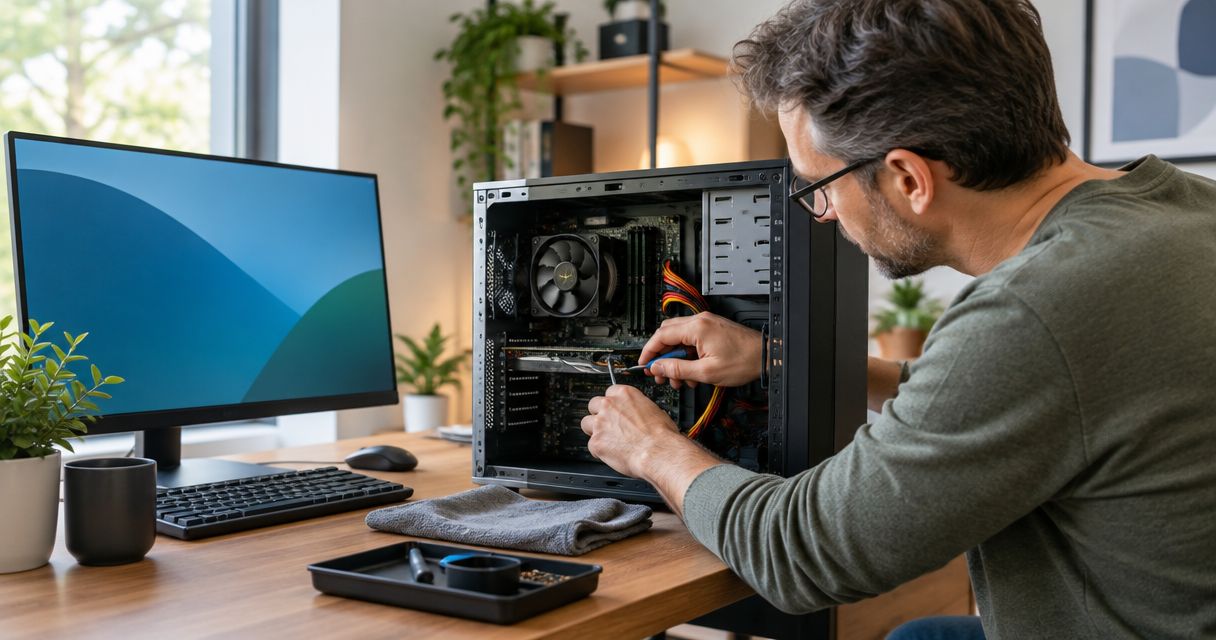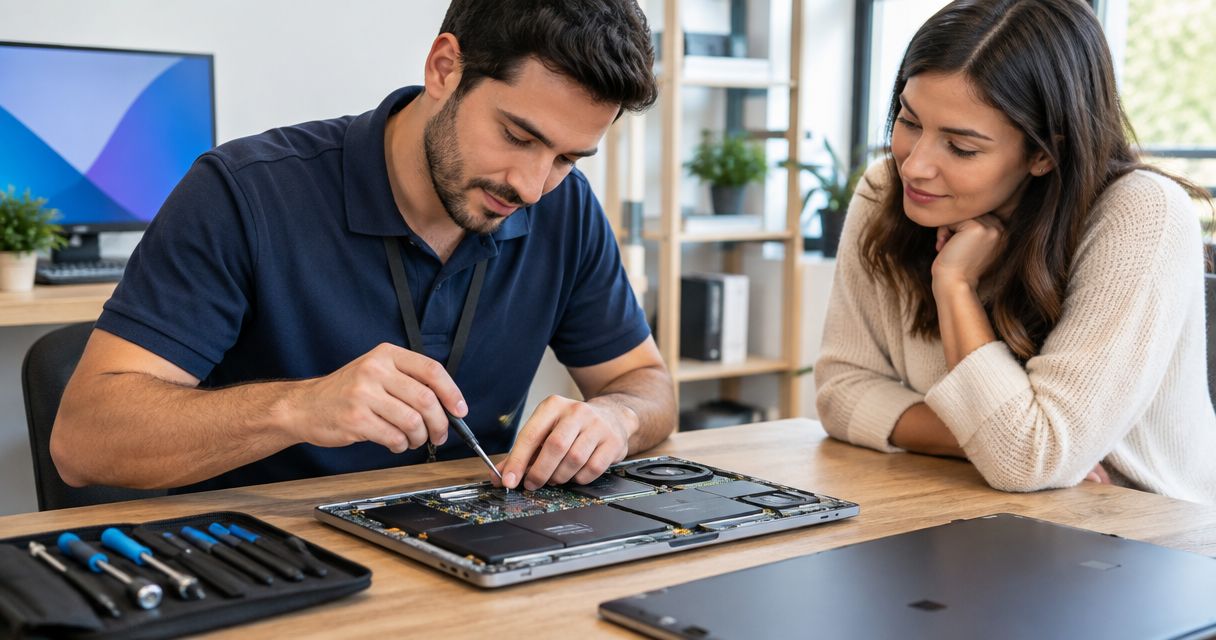
Outsourcing IT support is worth it for most small businesses in 2026 when it replaces reactive, pay-per-incident fixes with ongoing monitoring, backups, and a fixed monthly bill instead of a surprise invoice every time something breaks. The exception is a one- or two-computer operation with no sensitive customer data and no compliance obligations, where a managed contract can cost more than the occasional repair it's meant to prevent.
- Outsourcing IT support is worth it for most small businesses in 2026 once downtime starts costing more than a monthly retainer.
- Managed IT contracts add monitoring and backups on top of repairs; in-house hires add payroll, benefits, and training with no coverage after 5pm.
- Regulated businesses -- medical, legal, accounting, insurance -- get the most value from outsourced network security and disaster recovery.
- TechConnect LLC and other North Carolina managed IT support providers price around endpoint count and business size, not a flat number.
- Running with no dedicated IT support at all, break-fix or managed, is the riskiest setup a small business can carry into 2026.
Why this matters
A single infected laptop or a failed hard drive doesn't stay contained to one machine anymore. Shared drives, cloud logins, and point-of-sale terminals are all connected, so one bad click can stall invoicing, payroll, or order processing for an entire office. TechConnect LLC works with homes and businesses across North Carolina on exactly this problem: PC tune-ups, virus removal, data backup and recovery, and managed IT support that catches issues before they become closures.
The decision to outsource isn't really about whether something will eventually break. It's about whether you find out from a monitoring alert at 2am or from an employee standing at your desk unable to work. That difference is the entire value proposition of managed IT support in 2026.
Is outsourcing IT support worth it for small businesses?
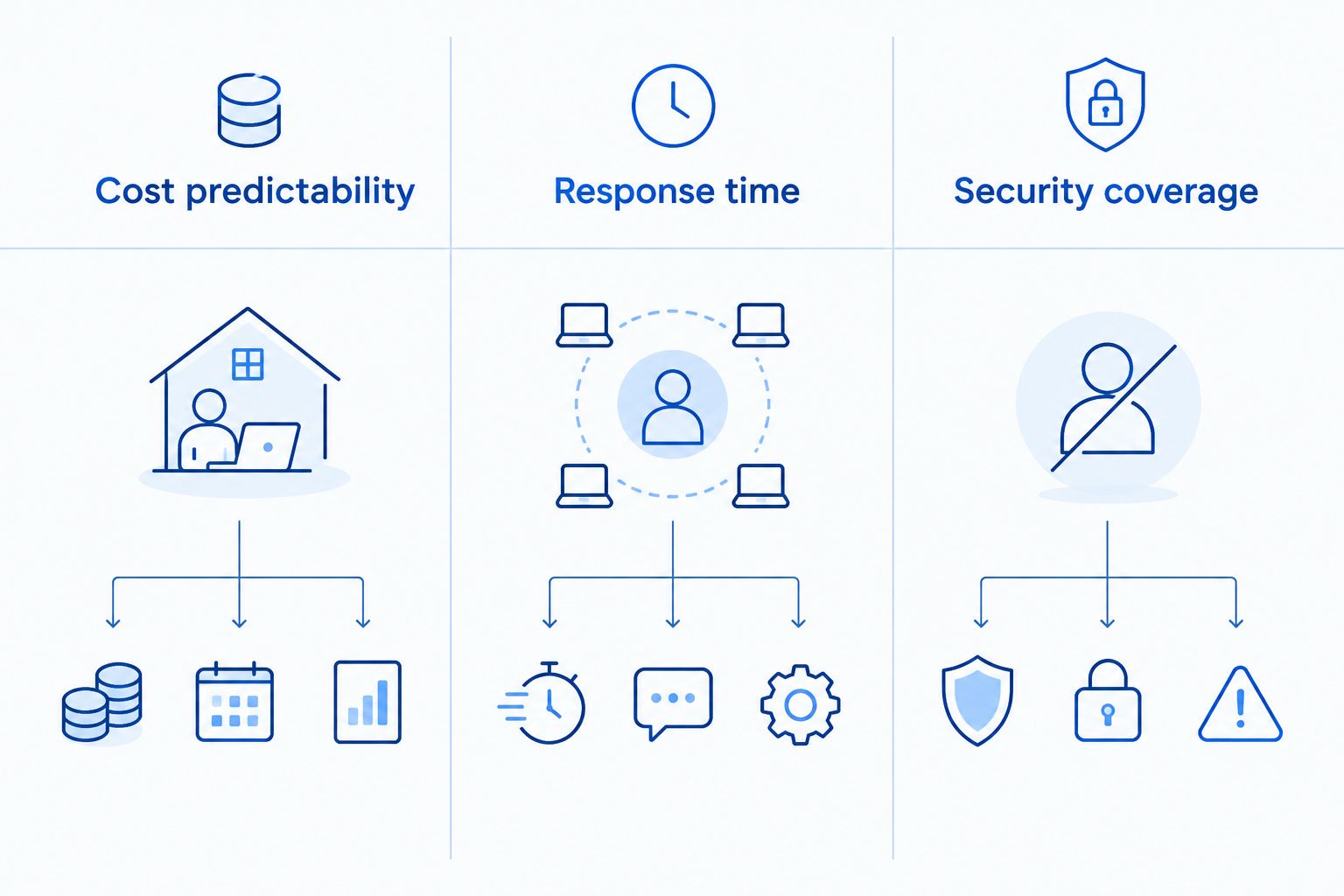
The honest answer depends on which of three models a business is currently running. Most small businesses fall into one of these, whether they've named it or not.
| Model | Cost predictability | Response time | Security coverage | Best for |
|---|---|---|---|---|
| In-house IT hire | Low -- salary plus benefits regardless of workload | Fast during business hours, none after | Depends entirely on one person's training | Businesses large enough to justify a full-time role |
| Outsourced / managed IT support | High -- flat monthly fee covers monitoring and support | Fast, often with after-hours coverage | Backups, patching, and monitoring run continuously | Most small businesses with 5+ computers or customer data on file |
| No dedicated IT support | Unpredictable -- pay per incident, per visit | Slow -- only after something fails | None until a technician is called in | Very small operations with no sensitive data and low complexity |
The in-house hire model gives fast response during the day but leaves gaps after hours and on weekends -- and one person can't cover every specialty (networking, backups, security, hardware) equally well. The outsourced model trades that single point of failure for a team and a flat bill, which is why it scores best on predictability. The no-support model looks cheapest until the first ransomware infection or hard drive failure, at which point it becomes the most expensive option on this table by a wide margin.
Why the value of outsourcing IT support varies
Not every small business gets the same return from a managed IT contract. The factors that move the needle:
- Employee and endpoint count -- more computers, more attack surface, more value from centralized monitoring
- Compliance requirements -- HIPAA, PCI-DSS, and state data breach laws raise the cost of a mistake and the value of documented security controls
- Vendor sprawl -- a business running POS systems, VoIP phones, cloud accounting, and remote logins needs someone coordinating all of it
- In-house tech skill -- if nobody on staff can troubleshoot a network issue, outsourcing replaces a skill gap rather than duplicating one
- Growth stage -- a business adding staff or locations in 2026 outgrows ad hoc fixes faster than it expects
- Backup and disaster recovery needs -- any business that can't afford to lose a day of files needs recurring backups, not occasional ones
“If your staff spends real time fixing computer problems instead of running the business, outsourcing has already paid for itself.”
Businesses handling regulated data -- accounting firms, medical practices, insurance agencies -- tend to see the clearest payoff because a breach or outage carries compliance risk on top of the operational one. A retail shop running a single register with no stored customer data has a much thinner case for a full managed contract and might be better served by pay-per-visit support instead.
Get a Free IT Diagnostic
See where your network, backups, and security stand before you commit to a contract.
Is managed IT support worth it for a small business in 2026?
Managed IT support is worth it in 2026 for any small business where an hour of downtime costs more than a fraction of the monthly fee -- which covers most offices running customer records, payment processing, or shared files. The full breakdown of when managed support pays off walks through the break-even point in more detail than a single answer can.
Is outsourcing IT cheaper than hiring an in-house IT person?
Outsourcing is usually cheaper than a single in-house hire for a business under roughly 20-30 employees, because a managed contract splits a support team's cost across many clients instead of one salary covering one business. The monthly managed IT cost guide breaks down what drives that number up or down for a given office.
What's the difference between break-fix and managed IT support?
Break-fix IT support means paying per visit only when something fails, while managed IT support means a flat recurring fee that covers ongoing monitoring, patching, and backups whether anything breaks or not. Break-fix works for very small, low-risk setups; managed support wins once downtime or data loss becomes a real business risk.
FAQ
Is outsourcing IT support worth it for small businesses in 2026?
Outsourcing IT support is worth it in 2026 for most small businesses once they have five or more computers, stored customer data, or any compliance requirement. Very small, low-risk operations sometimes do fine with pay-per-visit support instead.
How much does IT support cost per hour in NC?
Hourly IT support rates in North Carolina vary by provider and the complexity of the job. The current pricing breakdown for hourly rates in NC covers what drives the range.
Do small businesses really need managed IT support or just occasional repairs?
Businesses handling customer data, payment processing, or shared files benefit most from managed IT support because it adds monitoring and backups between visits, not just a fix when something fails. A single computer with no sensitive data can often get by on occasional repairs.
What happens if a small business skips IT support entirely?
Skipping dedicated IT support entirely means every issue -- a virus, a failed hard drive, a network outage -- gets discovered only after it stops work, with no monitoring catching it earlier. This is consistently the most expensive path once a serious incident hits.
Is managed IT support only for large companies?
Managed IT support is built for small businesses just as much as large ones -- contracts scale to the number of computers and users a business runs. A five-person office and a fifty-person office both fit the same model at different price points.
Can a small business switch from break-fix to managed IT support later?
Yes, a business can move from break-fix to managed IT support at any point, and most providers start with a network and backup assessment before setting up ongoing monitoring. There's no requirement to commit before understanding the current setup.
Does outsourcing IT support help with data backup and recovery?
Outsourced IT support typically includes recurring, automated backups as a core service, not an add-on -- which is the main gap in most break-fix and no-support setups. That coverage is often the single biggest reason businesses outsource in the first place.
Is outsourcing IT support the same as buying antivirus software?
No -- antivirus software is one piece of a security stack, while outsourced IT support covers monitoring, backups, patching, and response across the whole network. Software alone doesn't catch a failing hard drive or a misconfigured backup.
One last thing
Most small businesses evaluating outsourcing focus on monthly cost and skip the backup question entirely -- and backups are usually where break-fix setups fail hardest, because nobody notices a backup stopped running until the day it's needed. Before comparing quotes, check whether your current backup actually restores a file successfully. If nobody's tested that in 2026, that's the real gap outsourcing is meant to close.