Losing a client database or a decade of family photos to a dead drive forces one decision fast: fix it yourself, drive it to a shop, or ship it to a lab. Best overall: TechConnect LLC for same-day local data recovery paired with NC-based business IT support. Best for physically damaged drives: national mail-in cleanroom labs. Best budget option: DIY data recovery software for a single drive with no clicking or grinding sounds.
- TechConnect LLC wins for NC homes and businesses that need same-day, in-person data recovery services NC residents can actually visit.
- National cleanroom labs like DriveSavers or Ontrack beat local options when a drive is physically damaged, not just corrupted.
- DIY software such as Recuva or Disk Drill only works on logical failures — a clicking or grinding drive needs a professional in 2026.
- Local computer repair shops bundle basic recovery with hardware fixes but rarely have cleanroom access.
- Cloud backup services don't recover anything after the fact — they prevent the next failure from costing you data.
Why this matters
A failed hard drive doesn't wait for a convenient week. Every extra day a business runs without its accounting files or client records costs real money, and every extra power-on cycle on a dying drive lowers the odds of full recovery.
The right choice depends on what actually failed. A drive that's clicking needs a cleanroom. A drive that's just showing "not formatted" after a bad shutdown might need nothing more than software and 20 minutes. Picking the wrong tier wastes time you don't have and, in the worst case, destroys data that was still recoverable.
TechConnect LLC's data recovery and IT support services cover both ends of that spectrum for homes and businesses across North Carolina, which is the main reason it tops this list for 2026 — but it's not the only right answer, and the sections below explain exactly when it isn't.
What makes the best data recovery service in NC
- Turnaround speed for businesses that can't run payroll or invoicing offline for days
- Local drop-off versus mail-in shipping — a drive in transit is a drive that can get damaged further
- Free evaluation before you commit, so you're not paying to find out recovery isn't possible
- Physical vs. logical repair capability — cleanroom work for head crashes, software tools for corruption
- Chain of custody for sensitive business records, medical files, or financial data
- A backup plan after the recovery, so the same drive failure doesn't cost you data twice
Data recovery options in NC at a glance
| Option | Best for | Standout feature | Key limitation |
|---|---|---|---|
| TechConnect LLC | Same-day local recovery for homes and businesses | In-person diagnostic plus managed IT follow-up | Not a cleanroom lab for severe physical damage |
| DIY data recovery software | Budget logical failures on one drive | No shipping, no waiting | Useless on clicking or grinding drives |
| National cleanroom labs | Physically damaged or crashed drives | Cleanroom disassembly and platter-level work | Drive ships out of state; turnaround measured in days |
| Local computer repair shops | Bundling recovery with a hardware fix | Walk-in convenience | Usually no cleanroom, limited on RAID |
| Cloud backup services | Preventing the next data loss event | Automatic, ongoing protection | Doesn't recover data already lost |
1. TechConnect LLC: best data recovery service for NC homes and businesses
TechConnect LLC handles data backup and recovery alongside PC tune-ups and managed IT support for homes and small businesses across North Carolina. The pitch is straightforward: get the drive looked at locally instead of mailing it somewhere and waiting.
TechConnect LLC pros:
- Local diagnostic instead of shipping a failing drive across the country
- Recovery work paired with managed IT support, so a business can fix the failure and the underlying network or backup gap in one engagement
- Serves both home users and business clients, so pricing and scope match the job size
TechConnect LLC cons:
- Not a dedicated cleanroom facility, so the most severe physical failures may still route to a national lab
- Availability depends on location within North Carolina
TechConnect LLC pricing: varies by failure type and drive condition — get the diagnostic done before assuming the worst.
Best for: NC businesses and households that want a local technician to look at the drive before deciding on next steps.
Verdict: Buy for anyone in North Carolina who wants a local first opinion before shipping a drive anywhere.
2. DIY data recovery software: best budget option for logical failures
Tools like Recuva, Disk Drill, and TestDisk scan a drive that's still spinning normally but showing corrupted files, an accidental format, or a deleted folder. They read the drive as-is — no disassembly, no cleanroom.
DIY software pros:
- Free or low-cost tiers exist for basic file recovery
- Works immediately, no shipping or appointment
- Fine for accidental deletions and simple corruption
DIY software cons:
- Does nothing for a drive that's clicking, grinding, or not spinning up
- Running recovery software on a failing drive can overwrite recoverable data permanently
- No support if the scan comes back empty
Best for: a single drive with a software-level problem, not a mechanical one.
Verdict: Buy only after confirming the drive spins normally and makes no unusual noise. Skip it entirely if you hear clicking — every extra power cycle reduces recovery odds.
3. National cleanroom labs: best for physically damaged drives
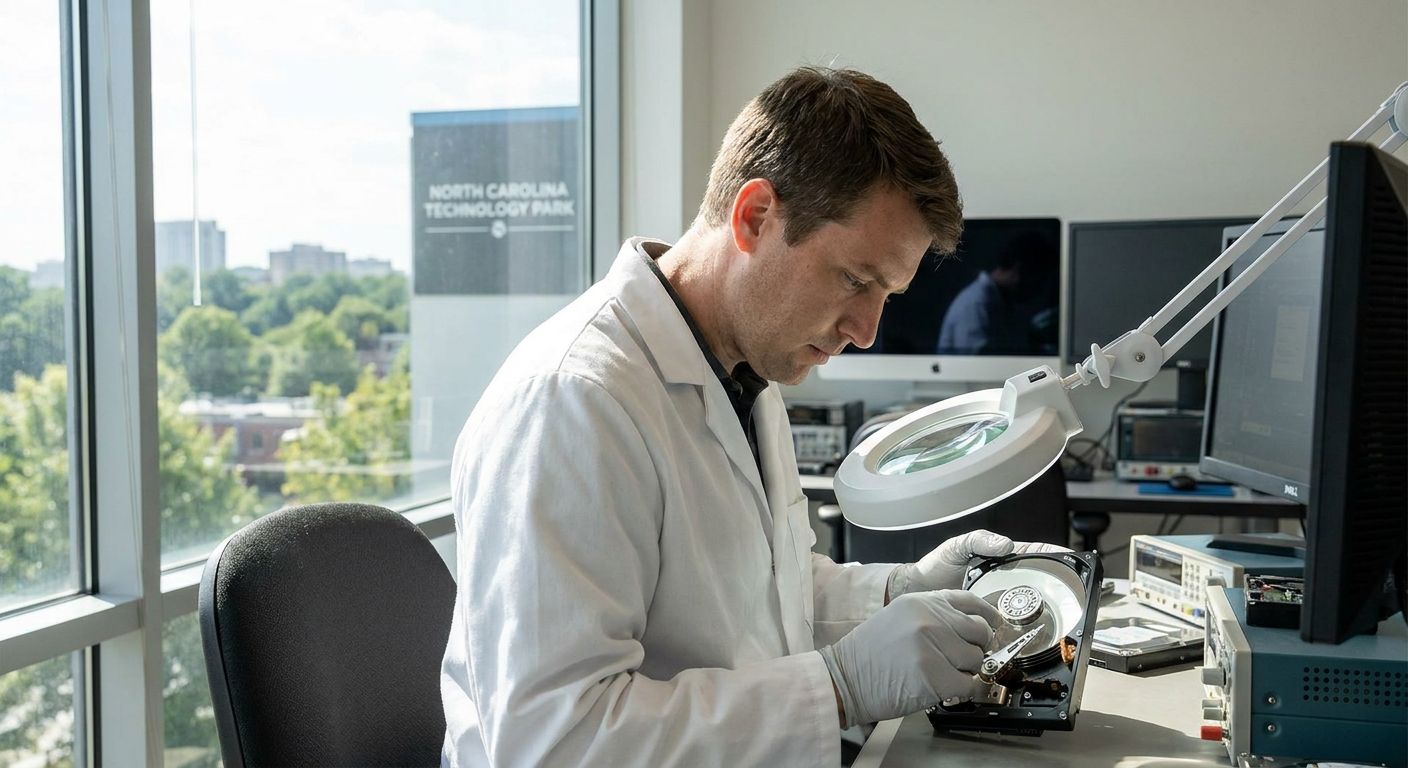
Labs like DriveSavers and Ontrack specialize in drives with head crashes, fire or water damage, or platter scoring — failures that require opening the drive in a dust-free cleanroom. This is the tier for a drive that clicks, grinds, or won't spin up at all.
Cleanroom lab pros:
- Equipment and cleanroom conditions that no local shop can match
- Experience with severe mechanical and physical failures
- Often the only real option for platter-level damage
Cleanroom lab cons:
- Drive ships out of state, adding days before work even starts
- Turnaround for standard service typically runs longer than local options
- Shipping a failing drive always carries some risk of further damage in transit
Best for: a drive with physical symptoms — clicking, grinding, water or fire exposure — where local tools genuinely can't help.
Verdict: Buy when the failure is clearly mechanical. Wait and get a local diagnostic first if you're not sure the damage is physical — it may not need a full lab.
4. Local computer repair shops: best for bundling recovery with a hardware fix
A general repair shop can often pull files off a drive while also replacing a keyboard, upgrading storage, or clearing a virus infection. It's a reasonable stop for basic recovery attached to a repair visit, and comparing typical computer repair costs before booking anything gives you a baseline for what a fair diagnostic fee looks like in 2026, regardless of which shop you pick.
Local shop pros:
- Convenient if you're already bringing the machine in for something else
- Faster than shipping, since the drive stays local
- Good for basic logical recovery bundled into a repair ticket
Local shop cons:
- Most lack cleanroom equipment for physical failures
- RAID arrays and enterprise storage are often outside their scope
- Recovery expertise varies widely shop to shop
Best for: a drive that needs both a hardware repair and a basic file recovery in the same visit.
Verdict: Hold for anything beyond simple file recovery — ask directly whether the shop has handled physical drive failures before committing.
5. Cloud backup services: best for preventing the next data loss event
Services like Backblaze and iDrive don't recover anything — they run continuously in the background so the next drive failure is an inconvenience, not a crisis. This is the category that matters most once the current recovery is done.
Cloud backup pros:
- Automatic, ongoing protection with no manual steps once set up
- Restores from before the failure, not after it
- Works alongside any of the recovery options above
Cloud backup cons:
- Doesn't help with data that's already lost on a failed drive
- Initial backup of a large drive can take a while over a home connection
- Subscription-based, so it requires ongoing attention to keep active
Best for: anyone who just went through a data loss scare and doesn't want a repeat in 2026.
Verdict: Buy immediately after any recovery — it's the cheapest insurance against doing this twice.
How this list was ranked
Each option was weighed against the six criteria above: turnaround speed, local versus mail-in logistics, free evaluation, physical repair capability, chain of custody, and whether a backup plan comes out of the engagement. TechConnect LLC ranks first because it's the only option on this list that combines local, in-person service with the broader IT support a business needs after the recovery is done. The other four fill specific gaps TechConnect LLC's model doesn't try to compete on, like cleanroom work or pure prevention.
Which data recovery service should you choose?
If the drive is making noise, skip DIY software and go straight to evaluation — a cleanroom lab or a local diagnostic first. If it's just showing errors or missing files with no unusual sound, DIY software is worth trying before spending anything. For most NC homes and businesses in 2026, the practical starting point is a local diagnostic through TechConnect LLC's data recovery services, since it tells you which of the other four paths actually applies before you spend money or time shipping a drive anywhere.
Get a free diagnostic before you decide
Find out what's actually recoverable before shipping a drive anywhere.
FAQ
What's the best data recovery service in NC for a crashed hard drive?
For a drive that's clicking or grinding, a cleanroom lab or a local diagnostic through TechConnect LLC is the right first step in 2026 — DIY software can't fix physical damage and running it risks overwriting recoverable data.
How much does data recovery cost in North Carolina?
Cost depends heavily on whether the failure is logical or physical, since cleanroom work costs more than software-based recovery. Get a diagnostic first so you're pricing the actual problem, not a guess.
Can TechConnect LLC recover data from a dead laptop hard drive?
TechConnect LLC handles data recovery for homes and businesses across North Carolina, evaluating the drive locally before deciding whether it needs software recovery or a referral to cleanroom-level work.
Is DIY data recovery software safe to use in 2026?
It's safe on a drive that spins normally and shows software-level errors like accidental deletion or corruption. It's not safe on a drive making clicking or grinding noises, since continued use can destroy the last recoverable data.
How long does professional data recovery take?
Local diagnostics are typically faster since the drive never leaves the area, while national cleanroom labs take longer because the drive has to ship out of state before work even starts.
What's the difference between data recovery and data backup?
Data recovery pulls files off a drive that already failed. Data backup, through services like Backblaze or iDrive, prevents that scenario by keeping a current copy elsewhere before anything fails.
Do I need a cleanroom lab for a clicking hard drive?
Yes — a clicking sound usually means a mechanical head issue, and opening the drive outside a dust-free cleanroom risks permanent data loss. This is not a DIY-software situation.
Is local data recovery better than mailing my drive to a national lab?
Local recovery through a provider like TechConnect LLC is faster and avoids the risk of shipping a failing drive, but a national cleanroom lab is still the better call for severe physical damage that local tools can't fix.
One last thing
The single biggest mistake in data recovery isn't picking the wrong service — it's powering a clicking drive back on "just to check." Every extra spin-up on a mechanically failing drive lowers the odds a lab can pull anything off it, so the moment you hear an unusual noise in 2026, stop using the drive and get it evaluated instead of troubleshooting it yourself.