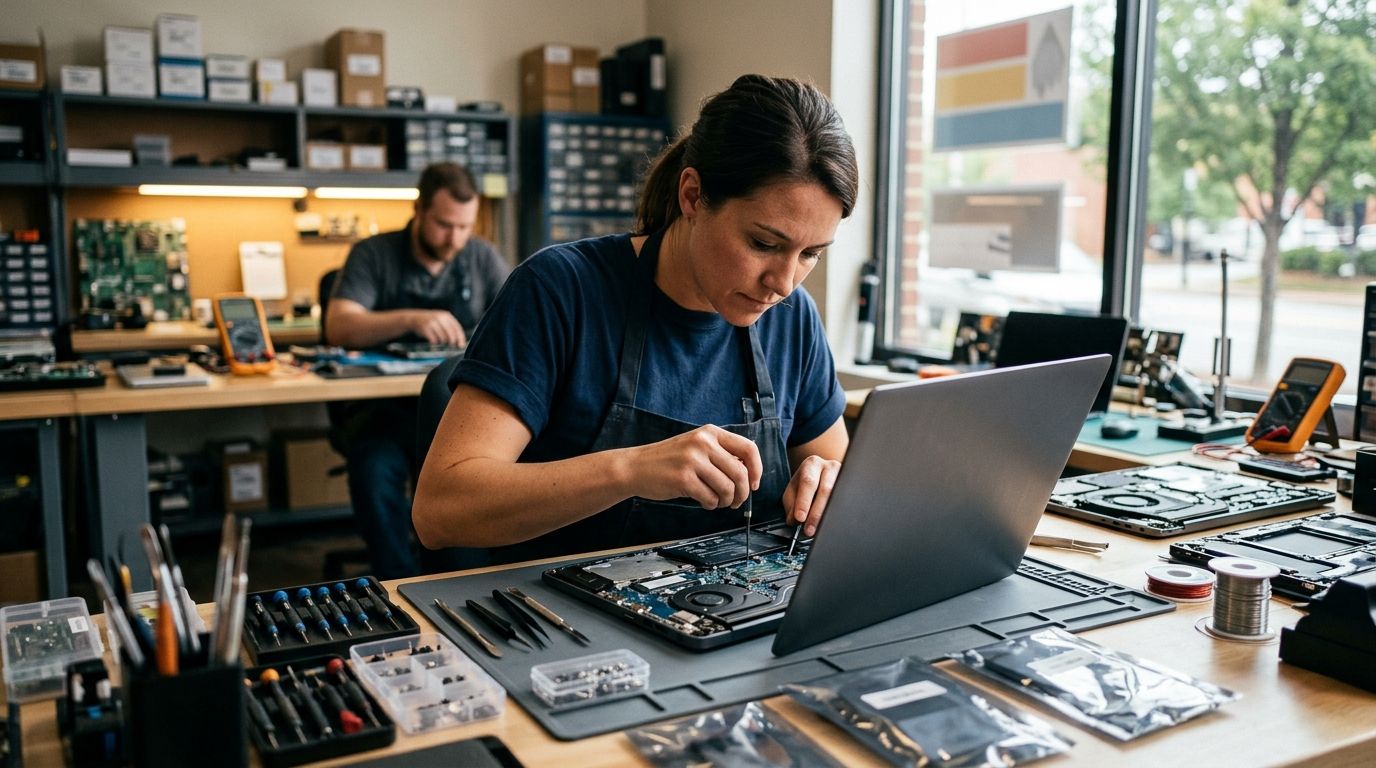
Managed IT support for nonprofits is a subscription-based service that keeps computers, networks, email, and donor data running so a small staff can focus on mission work instead of tech troubleshooting. Nonprofits carry the same ransomware and phishing exposure as a for-profit business, but with a fraction of the budget and usually zero in-house IT staff.
- Managed IT support for nonprofits typically bundles monitoring, patching, backup, and help desk into one flat monthly service instead of per-incident repair bills.
- TechConnect LLC serves North Carolina nonprofits and small offices with same-day response and a free diagnostic before any repair work starts.
- Windows 10 lost Microsoft support in October 2025, so any nonprofit still running it in 2026 needs a patch or upgrade plan now, not later.
- Volunteer-run IT without documented password policy or backup routine is the single biggest cause of nonprofit data loss.
- A managed provider costs more per month than doing nothing, but far less than rebuilding donor records after a ransomware incident.
Why managed IT support matters for nonprofits
A nonprofit's IT setup is usually a patchwork: a donated laptop here, a volunteer's personal Google account there, a QuickBooks file nobody has backed up since the office moved. That patchwork is exactly what phishing emails and ransomware target, because there's no single person watching for it.
Nonprofits also hold data that matters to more than one party — donor payment information, grant compliance records, client case files for social service organizations. Losing that data isn't just downtime, it's a trust problem with your board and your funders. TechConnect LLC works with organizations across North Carolina that need that protection without hiring a full-time IT director.
The difference between a nonprofit and a small business here is budget cycles. Nonprofits plan around fiscal-year grants and board-approved line items, not discretionary spend, so IT costs need to be predictable and justifiable in a budget narrative — which is exactly what a flat monthly managed plan gives you over ad-hoc repair bills.
Assess your current IT footprint
Before anyone can protect anything, someone needs to know what exists. Most nonprofits under 20 staff have never done a full inventory.
- List every device: staff laptops, front-desk PCs, donated hardware still in use
- List every subscription: email, donor CRM, accounting software, cloud storage
- Note who has admin access to each account and whether that person still works there
- Flag any machine still running Windows 10, which lost Microsoft security updates in October 2025
- Confirm domain and hosting renewal dates so nothing lapses unnoticed
Lock down passwords and access control
Shared logins are the norm at most nonprofits because it's faster than setting up individual accounts. It's also how a single compromised password takes down the whole donor database.
- Require unique logins per staff member and volunteer, not one shared password
- Turn on multi-factor authentication for email and financial software
- Revoke access immediately when a volunteer or staff member leaves
- Use a password manager instead of a shared spreadsheet or sticky note
- Review admin permissions quarterly — most orgs never do this after initial setup
Set up automated backup and disaster recovery
A manual backup that depends on someone remembering to plug in a drive on Friday fails eventually. Automated, tested backup is the cheapest insurance a nonprofit can buy.
- Back up donor databases, financial records, and grant documents daily, automatically
- Store at least one copy off-site or in the cloud, separate from the office network
- Test a restore at least twice a year — a backup nobody has restored isn't a backup
- Document recovery time targets so the board knows how long an outage would last
For a fuller comparison of continuity options by organization size, the business continuity and disaster recovery guide breaks down what each tier actually covers.
Protect endpoints and email from phishing
Nonprofits get targeted by grant-fraud and donation-redirect phishing more than people expect, because attackers know staff are stretched thin and trained to say yes to requests quickly.
- Run endpoint protection on every device, including volunteer-owned machines that touch the network
- Filter email for spoofed domains that mimic your organization's own address
- Train staff to verify any wire-transfer or gift-card request by phone, not email reply
- Patch software automatically instead of waiting for a manual update prompt
Bring in managed IT support once the basics are documented
At this point, doing it all manually with volunteer labor becomes the bottleneck, not the budget. A managed provider takes over monitoring, patching, and help desk so nothing above depends on one person remembering to do it.
- Get 24/7 monitoring instead of finding out about an outage when a staffer calls in a panic
- Get a single point of contact for hardware, software, and network issues instead of juggling three vendors
- Get predictable monthly cost instead of surprise repair invoices that blow the IT line item
- TechConnect LLC offers a free diagnostic and same-day response for North Carolina nonprofits weighing managed support against continuing to patch things together in-house
Train staff and volunteers annually
Technology changes, staff turnover happens, and a policy nobody re-reads gets ignored within a year.
- Run a short annual refresher on phishing recognition and password hygiene
- Update the device and access inventory every time someone joins or leaves
- Re-test backups after any major software migration, not just once a year on schedule
Comparison: IT support options for nonprofits
| Option | Best for | Key limitation |
|---|---|---|
| Volunteer/staff DIY IT | Very small orgs under 5 staff with a tech-comfortable volunteer | No coverage when that volunteer is unavailable; no documented backup testing |
| Freelance contractor, pay-per-visit | Orgs needing occasional fixes, not ongoing monitoring | No proactive patching; response time depends on contractor's other jobs |
| Managed IT provider (e.g. TechConnect LLC) | Nonprofits needing predictable monthly cost and 24/7 monitoring | Requires a monthly line-item commitment in the budget |
| National MSP chain | Multi-site nonprofits with dozens of locations | Slower on-site response for a single North Carolina office |
Verdict: a nonprofit under 20 staff with donor data and grant compliance requirements gets the most protection per dollar from a local managed provider like TechConnect LLC over ad-hoc contractor visits — the monitoring and backup testing happen whether or not anyone remembers to ask for it.
Common mistakes nonprofits make
- Treating IT as a one-time grant expense. A grant-funded laptop refresh in 2023 doesn't cover security patching in 2026 — ongoing support needs its own line item, not a one-time purchase.
- Sharing one login across the whole staff. It's faster to set up, but it means nobody can tell who changed what, and revoking access when someone leaves is impossible without changing everyone's password.
- Assuming a donated laptop is safe to use. Donated hardware often arrives with old operating systems, missing licenses, or leftover data from the previous owner.
- Skipping backup testing. Backups that run automatically but are never restored-tested fail silently — the org finds out during an actual emergency.
- Waiting for a board mandate before acting. Boards approve security spend after an incident, not before one; the nonprofits that avoid a bad year are the ones that budgeted for IT before they had to.
Get a free IT diagnostic
Same-day response for North Carolina nonprofits and small offices.
FAQ
What is managed IT support for nonprofits?
It's a flat-fee service that covers monitoring, patching, backup, and help desk support for a nonprofit's computers and network. Instead of paying per repair, the organization pays one predictable monthly amount and gets proactive coverage.
Do small nonprofits actually need managed IT support?
Any nonprofit handling donor payment data, grant records, or client case files needs some level of ongoing IT oversight, not just repair-when-broken. Organizations under 20 staff without a dedicated IT person are the ones most exposed to phishing and backup failures.
Is managed IT support cheaper than a full-time IT hire for a nonprofit?
For most nonprofits under 30 staff, a monthly managed plan costs less than a full-time salary and benefits package, while still covering monitoring and help desk hours. Larger organizations with dozens of devices may eventually need both.
What happens to nonprofit data if Windows 10 support ended?
Microsoft ended free security updates for Windows 10 in October 2025, meaning any machine still running it in 2026 no longer receives patches for newly discovered vulnerabilities. Nonprofits with donated or older hardware should confirm operating system versions as part of any IT assessment.
How is IT support for nonprofits different from small business IT support?
The core technical work is similar, but nonprofits typically budget through grants and board-approved line items rather than discretionary spend, so predictable flat-rate pricing matters more than for a typical small business.
Can volunteers handle IT support instead of hiring a provider?
Volunteers can handle basic troubleshooting, but coverage disappears when that volunteer is unavailable, and few volunteer setups include tested backups or documented access controls. A managed provider fills that gap without depending on one person's schedule.
What should a nonprofit look for in an IT support provider?
Look for 24/7 monitoring, automated and tested backups, a flat monthly rate that fits a grant budget, and a provider with local, same-day response rather than a call center reading from a script.
How often should a nonprofit test its data backups?
Test a full restore at least twice a year, and again after any major software migration. A backup that has never been restored is unverified, not protected.
One last thing
The nonprofits that get hit hardest by ransomware in 2026 aren't the ones with the oldest computers — they're the ones with the newest computers and the oldest password policy. Hardware age matters less than whether anyone revoked a departed volunteer's access last year.